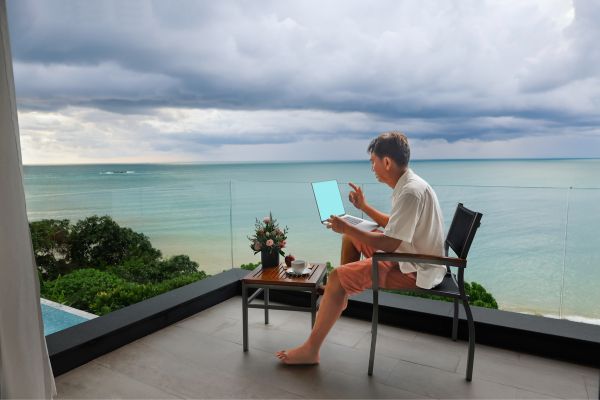
The idea of working from anywhere used to sound like a fantasy reserved for travel writers, freelancers with mysterious income streams, or people who seemed to live permanently between airports. Now, it is far more normal. A designer in Lisbon can work for a company in Toronto. A consultant can take meetings from Mexico City. A writer can spend a few months in Bali, then move on to Tbilisi or Medellín with a laptop, a passport, and a carefully checked visa file.
Still, the romance of the digital nomad life has become more complicated. Countries have started creating formal pathways for remote workers, but those pathways come with rules. Income thresholds, insurance requirements, tax questions, accommodation proof, background checks, and employer letters can all turn a dreamy relocation plan into a serious paperwork project. That is where a clear digital nomad visa guide becomes useful. It helps separate the Instagram version of remote work from the real-life steps needed to do it legally and calmly.
What a Digital Nomad Visa Really Means
A digital nomad visa is usually a temporary residence permit for people who earn income from outside the country where they want to live. In plain language, it lets you stay longer than a typical tourist while continuing to work remotely for a foreign employer, foreign clients, or your own overseas business.
The key detail is that you are not usually entering the local job market. You are not moving to take a job from a local company. Instead, you are bringing your own work with you. That distinction is what makes these visas attractive to governments. Remote workers may rent apartments, eat out, use coworking spaces, and spend money locally, while their income comes from abroad.
However, “digital nomad visa” is not a single global category. Every country designs its own version. Some call it a remote worker visa. Others treat it as a temporary residence permit, freelancer visa, long-stay visa, or special work-from-anywhere scheme. The names vary, but the basic idea stays similar: live temporarily in a country while working online for clients or employers elsewhere.
Why Digital Nomad Visas Became So Popular
Remote work changed the way many people think about location. For years, work was tied to an office, a city, or at least a daily commute. Then more companies learned that some jobs could be done from a laptop. At the same time, many countries noticed a new opportunity. Instead of attracting only tourists for a week or two, they could welcome remote workers for several months or even a year.
For travelers, the appeal is obvious. A digital nomad visa can offer a more stable experience than hopping between tourist entries. It gives time to settle in, build a routine, learn local habits, and live at a slower pace. Instead of rushing through a city with a suitcase, you can find your favorite grocery store, work from a quiet café, and understand what daily life actually feels like.
Yet popularity also brought more scrutiny. Employers became more cautious about tax and compliance risks. Some cities felt pressure from rising rents and changing neighborhood dynamics. Governments adjusted rules as they learned what worked and what did not. In 2026, digital nomad life is less about spontaneous escape and more about informed, responsible planning.
Who Usually Qualifies for a Digital Nomad Visa
Most digital nomad visas are designed for remote professionals who can prove steady income. This may include employees working for foreign companies, freelancers with international clients, online business owners, consultants, writers, developers, marketers, designers, coaches, and other location-independent workers.
The common requirement is simple on the surface: you must show that your work and income come from outside the host country. In practice, proving that can take effort. Employees may need a contract, employer letter, recent pay slips, and bank statements. Freelancers may need client agreements, invoices, tax records, and proof that income arrives regularly. Business owners may need company registration documents and financial statements.
Income requirements vary widely. Some countries set moderate thresholds, while others expect a higher monthly income. These numbers can change, so it is always important to check official government sources before applying. A blog post can help you understand the process, but the immigration office decides the rules.
Documents You May Need Before Applying
A good digital nomad visa guide should make one thing clear: preparation matters more than excitement. Before you fall in love with a destination, gather the documents that most programs tend to request.
You will usually need a valid passport with enough remaining validity. Many countries also ask for passport photos, proof of remote employment or freelance work, bank statements, health insurance, accommodation details, and a clean criminal record certificate. Some applications require proof of income for several months rather than a single recent payment.
Health insurance is another common requirement. A standard travel insurance policy may not always be enough, especially if the visa allows a long stay. Some countries ask for medical coverage valid in the host country for the full duration of the visa. Others may have specific minimum coverage rules.
It is also wise to prepare translated and notarized documents when needed. This is one of those small details that can delay an application. A document that looks perfectly fine to you may not be accepted if it is not translated into the required language or certified in the right format.
Choosing the Right Country for Your Work Style
Choosing a digital nomad destination is not just about beaches, cafés, or cheap rent. It is about how well a place fits your daily work life. A beautiful island can become frustrating if the internet drops during client calls. A lively city can lose its charm if the time zone forces you to work through the night.
Start with your work schedule. If you must match North American business hours, Latin America may feel easier than Southeast Asia. If you work with European clients, Portugal, Spain, Croatia, Greece, or similar time zones may fit more naturally. If your schedule is flexible, your options expand.
Then think about lifestyle. Do you want a big city with museums, transit, and coworking spaces? Or do you want a quieter town where your days revolve around nature and simple routines? Do you need international schools for children, good healthcare access, or direct flights home? The best visa on paper may not be the best life choice.
Cost of living also deserves honest attention. A country may have a low average cost, but popular digital nomad neighborhoods can be much more expensive than expected. Rent, workspace, transport, groceries, and healthcare should all be part of the calculation.
Understanding Taxes Before You Move
Taxes are one of the least glamorous parts of digital nomad life, but they are also one of the most important. A visa gives you immigration permission to stay. It does not automatically solve your tax situation.
Depending on your nationality, home country rules, length of stay, and income structure, you may still owe taxes at home. You may also trigger tax residency in your host country if you stay long enough or meet certain conditions. Some digital nomad programs offer tax benefits or exemptions, but these details are highly specific and can change.
This is where casual advice can be risky. A traveler on a forum may say, “Don’t worry, nobody checks,” but that is not a plan. If you earn meaningful income while living abroad, it is worth speaking with a qualified tax professional who understands cross-border remote work. The cost of good advice is usually far lower than the cost of fixing a mistake later.
Digital Nomad Visa Guide to Application Timing
Timing can make or break your plans. Some visas are approved quickly, while others take weeks or months. Some allow online applications, while others require visiting a consulate or applying after arrival. A few countries may ask for appointments that are not easy to get during busy seasons.
You should also avoid booking non-refundable long-term housing before your visa is approved unless you fully understand the risk. It is tempting to secure the dream apartment early, especially in popular cities, but immigration delays happen. Instead, many remote workers choose flexible accommodation for the first few weeks and look for a longer stay after arrival.
Another timing issue is document freshness. Bank statements, background checks, and insurance letters may need to be recent. If you collect everything too early, some documents may expire before submission. If you wait too long, you may feel rushed. The best approach is to read the official checklist first, then create a simple timeline around the documents that take longest to obtain.
Common Mistakes Digital Nomads Make
One common mistake is assuming that a tourist visa is “good enough” for remote work. In some places, short casual work during travel may exist in a gray area. In others, it can violate visa rules. The safest choice is to understand the law before you work from a country, especially for longer stays.
Another mistake is ignoring employer permission. Just because your job is remote does not mean your company allows you to work from another country. Employers may have legal, tax, data security, insurance, or payroll concerns. Before applying for a digital nomad visa, employees should check company policy and get written approval where possible.
Many people also underestimate loneliness. Digital nomad life can look social online, but real life may include quiet apartments, time-zone stress, language barriers, and the strange feeling of constantly starting over. Choosing places with coworking spaces, local classes, walking groups, or active communities can make the experience healthier and more sustainable.
How to Travel Responsibly as a Digital Nomad
A thoughtful digital nomad does not treat every destination like a temporary backdrop. Living somewhere, even for a few months, affects local communities. In some popular nomad hubs, rising rents and short-term housing demand have created tension with residents. That does not mean remote workers should not travel. It means they should travel with awareness.
Support local businesses beyond the most obvious expat cafés. Learn basic phrases in the local language. Follow housing rules. Respect local customs. Avoid acting as if lower prices exist only for your convenience. A place is not just affordable or scenic; it is someone’s home.
Responsible travel also means being honest about your footprint. Flying frequently, using local resources, and earning foreign income in a lower-cost destination all carry ethical questions. You do not need to be perfect, but you should be awake to the impact of your choices.
Is a Digital Nomad Visa Worth It?
For the right person, yes. A digital nomad visa can bring peace of mind, legal clarity, and the chance to experience a country more deeply than a short visit allows. It can turn travel from a rushed escape into a season of life. You can build routines, friendships, and a relationship with a place that feels more meaningful than passing through.
However, it is not always the best option. If you only want to stay for a few weeks, a regular tourist entry may be simpler, depending on the country’s rules. If your employer does not allow international remote work, a visa will not fix that. If your income is unstable, the financial requirements may feel stressful. And if you are using travel to avoid problems at home, a new country may only give those problems a nicer view.
The best decision comes from matching the visa to your real life, not your fantasy life. That means looking at your income, work hours, health needs, relationships, taxes, comfort with uncertainty, and reasons for going.
Conclusion
Digital nomad visas have changed the way people imagine work and travel, but they have not removed the need for planning. In fact, they have made planning more important. The freedom to work from another country is real, yet it comes with forms, rules, responsibilities, and choices that deserve careful thought.
A strong digital nomad visa guide should not make the lifestyle seem effortless. It should make it feel understandable. Once you know what to check, what documents to prepare, and what questions to ask, the process becomes less mysterious. The goal is not simply to move abroad with a laptop. The goal is to build a temporary life that is legal, steady, respectful, and genuinely good for you.
In the end, the best digital nomad experience is not about chasing every trending destination. It is about finding a place where your work, your budget, your values, and your curiosity can sit comfortably together. When that happens, remote work abroad becomes more than a change of scenery. It becomes a thoughtful way to live a wider, more intentional life.